

“The innovative monitoring technology could add an important extra layer of safety, helping responders feel more secure.”
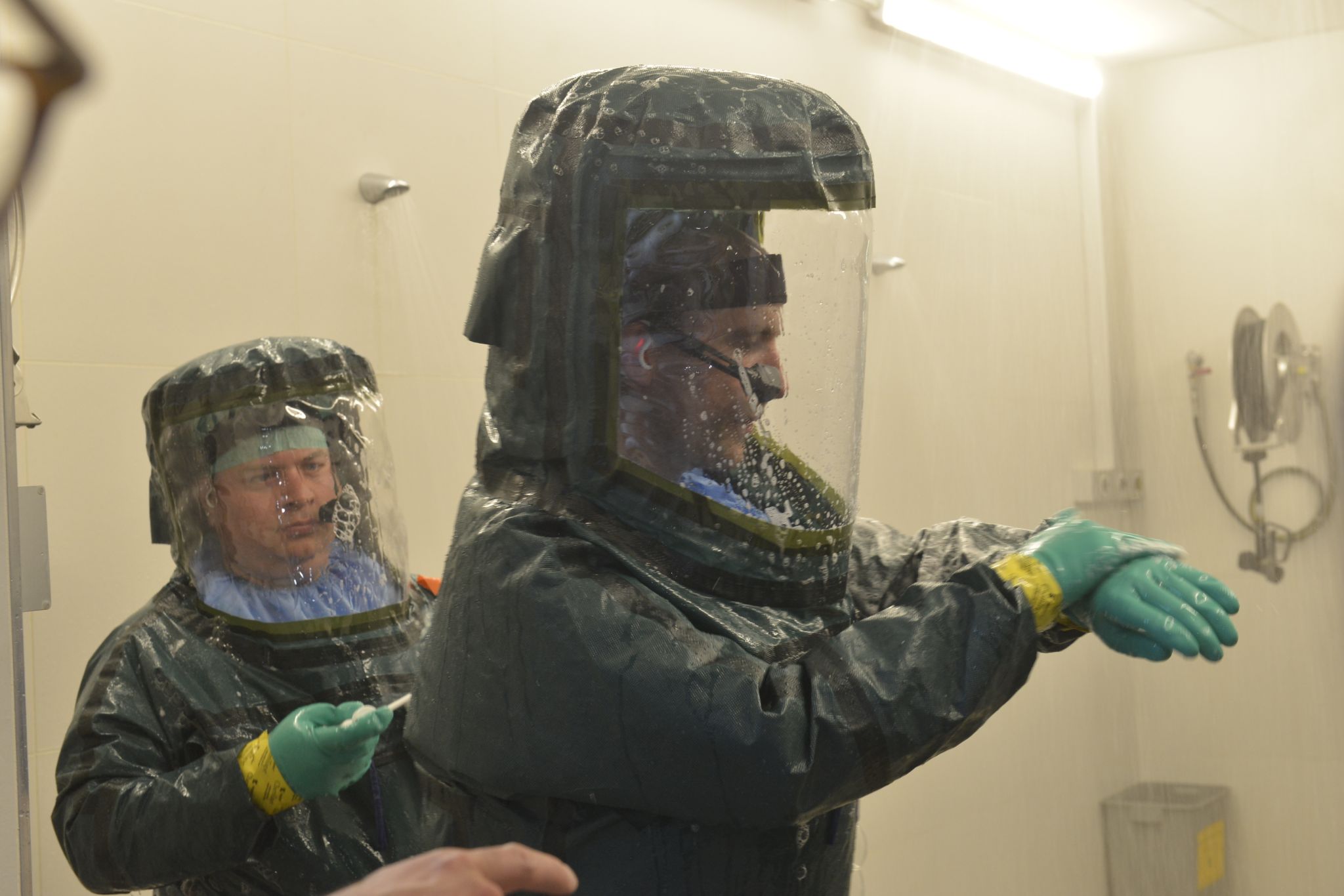
Medical response in CBRNe events places extraordinary demands on healthcare professionals, requiring not only clinical expertise but also strict attention to safety and coordination. And while emergency medicine traditionally focuses on patients, the responder safety is equally critical – because care can only be delivered effectively when medical personnel remain protected. Nevertheless, in high-risk, low-frequency CBRNe scenarios, continuous monitoring of responders has often been overlooked, despite its potential to significantly improve safety and decision-making.
On April 30, 2025, CEDIMED Brussels combined forces from its clinical (UZ Brussel) and research department (Vrije Universiteit Brussel (VUB)) to conduct a large-scale CBRNe simulation exercise at the UZ Brussel Emergency Department as part of a three-day preparedness training, with an innovative twist. During the exercise, different technologies including the cosinuss° patient monitoring was tested to evaluate its value and acceptance for both responder and patient safety.
We spoke with Evert Verhoeven, Emergency Medicine Resident at UZ Brussel, Researcher in the Research on Emergencies and Disaster Management (ReGiDIM) and CBRNe trainer, about his experience in disaster medicine, the challenges medical teams face in potentially contaminated environments, and the lessons learned from using cosinuss° in-ear sensors during the simulation.

About the interview partner:
Evert Verhoeven, MD. Emergency Medicine consultant at the Universitair Ziekenhuis Brussel UZ Brussel, graduated in Medicine at the KU Leuven in 2010 and started a residency in Emergency Medicine (finished 2016). Additionally, he got accredited in the European Master after Master in Disaster Management (EMDM) and is closely involved in Disaster Preparedness in UZ Brussel. He is also interested in Ultrasound, Simulation Training and General Education. He is a founding member of BEUS (Belgian Emergency Ultrasound Society).
Evert Verhoeven, what is your role and experience in CBRNe medical response operations?
I am an emergency physician at the University Hospital of Brussels, where I have worked for almost ten years, mainly as a consultant. My early focus was on disaster management and ultrasound training, ensuring staff was trained in hands-on skills. My interest in disaster medicine started during my training, especially after experiencing a major mass-casualty event caused by a severe weather disaster during the Pukkelpop Festival in Belgium in 2011, which showed me that emergency medicine is not only about individual patients but also about managing systems, patient flow, and doing the best possible for the greatest number of people. During my disaster management training, CBRNe was usually only a small theoretical component, and large-scale practical exercises were rare because they are difficult to organize.
From your perspective, what are the main objectives of CBRNe preparedness training, such as the recent simulation exercise at VUB?
The primary goal is not so much medical treatment itself but management, coordination, and patient flow. CBRNe incidents require a completely different way of thinking compared to normal emergencies or standard mass-casualty incidents. Hospitals such as ours, must create separate dirty, decontamination, and clean zones and reorganize workflows accordingly. These scenarios require significantly more personnel and careful organization, so training is essential to ensure staff are capable and feel safe when facing contaminated patients.
What are the main challenges medical personnel face when treating casualties in a contaminated environment?
One major challenge is staffing the decontamination zone. Knowing the risks, the personnel can often feel unsafe. Additionally, because CBRNe events are rare but high-risk (“high acuity, low occurrence”), and lack of training can increase fear. Yet proper training in donning and doffing protective suits makes the environment relatively safe. Another challenge is ensuring correct and timely treatment while protecting both staff and patients. Recognizing symptoms quickly and avoiding mistakes is critical, as errors can endanger both victims and responders.
Communication and coordination between medical personnel are often mentioned as key issues in CBRNe scenarios. Why are these so critical?
Communication is already one of the main limiting factors in disaster medicine and becomes even more difficult in protective suits. Noise from the filtering system and the water hitting PPE-suits, restricted hearing, and the inability to easily operate radios make clear communication challenging. Additionally, communication must work in both directions: teams in the hot zone must relay information to leadership, and leadership must maintain oversight. Finally, communication with patients is also difficult, increasing their stress. Finding reliable, hands-free, voice-driven communication solutions remains an ongoing challenge, in which we made significant progress, yet remain critical towards the existing tools and technology.
What are the specific medical challenges when treating patients exposed to hazardous substances?
The priority is rapid decontamination, so a clean team can safely treat the patient. Many interventions become difficult and time-consuming in full protective gear, so only life-saving measures – such as airway management or antidote administration – are recommended to be performed in the hot zone. Accurate symptom recognition is essential to avoid incorrect treatment, and responders must protect themselves at all times.
What are the key physiological parameters of the medical teams that should be continuously monitored and why?
Traditionally, there has been little or no monitoring of personnel in protective suits, even though responder safety is critical. Only verbal cues on the state of the personnel, of them dropping down can alert us, nowadays. Given the importance of heart rate and body temperature and their combined indication, heat stress and exhaustion monitoring is crucial for personnel safety. Not only as cut off values, but also by monitoring trends responders can be identified to be withdrawn before reaching dangerous limits. We strongly think respiratory rate and blood pressure could provide additional insight, but more research is needed to prove this.
During the simulation exercise conducted by VUB, cosinuss° in-ear sensors were used to monitor vital signs of the medical staff. What was your impression?
In the exercise, the system was tested mainly as a trial rather than fully integrated into operations. The innovation department (with the help of cosinuss° research team) gave a five minute introduction, maximum, as they were convinced the sensors would be very intuitive. After the introduction everybody wore them without any issues.
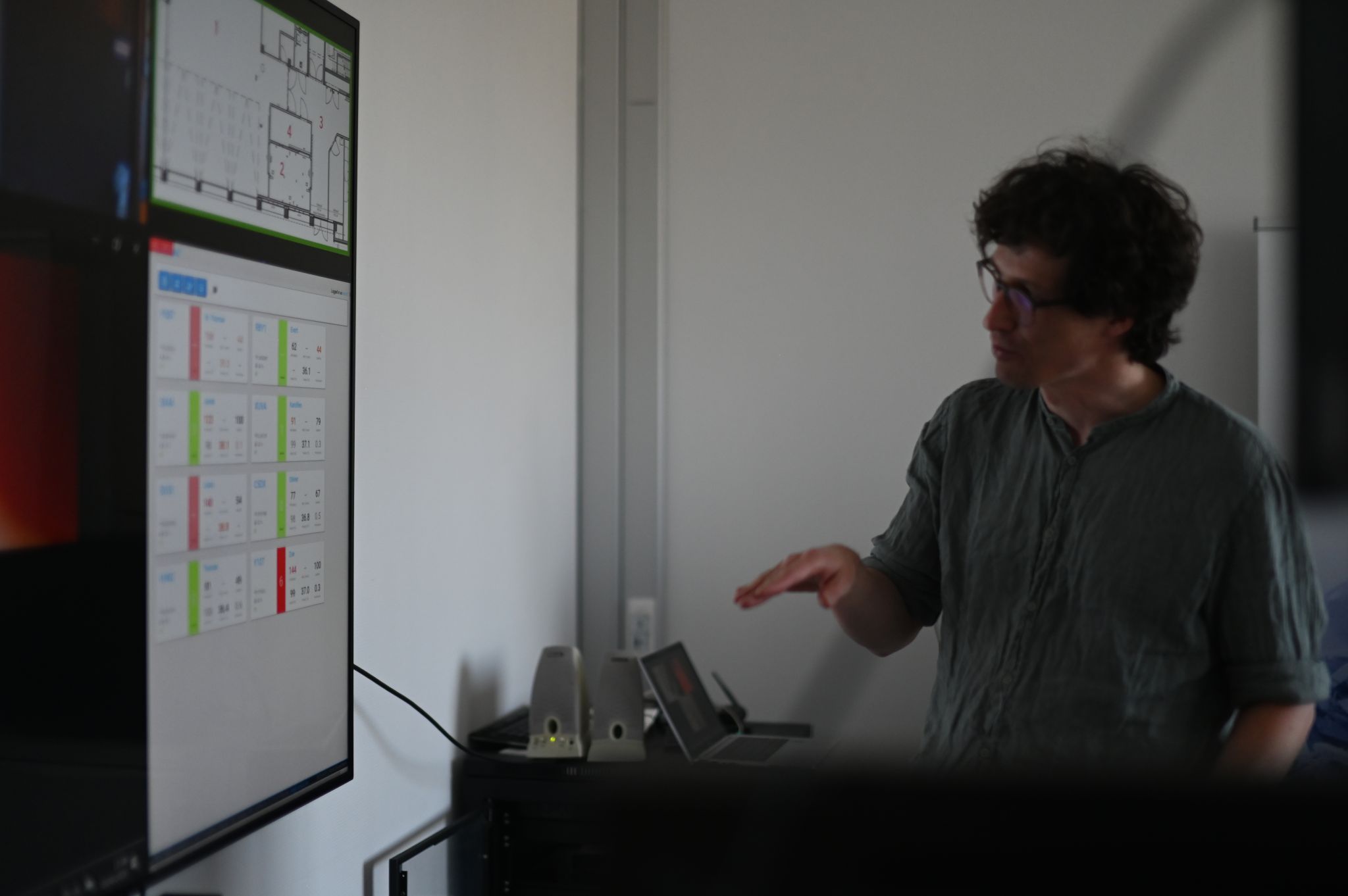
The data showed clear value: some responders reached very high temperature and heart-rate levels and although discussions were undertaken during the exercise, the debrief indicated that -even though there was no danger during the exercise- they should have been withdrawn earlier. Continuous monitoring could give leaders real-time insight into responder condition, which is difficult to assess visually in protective suits. To be fully effective, the system should be directly integrated into operational workflows and provide real-time feedback to decision-makers. Something we’re working on right now.
How valuable is continuous insight into responders’ vital parameters for commanders or medical leads?
It is extremely valuable because it allows leaders to detect early signs of fatigue or heat stress and withdraw responders safely before they reach dangerous limits. Monitoring trends rather than single values is key. This adds an important layer of safety and improves decision-making during operations.
What advantages do mobile and ultralight monitoring systems offer compared to traditional methods?
Traditionally, there has been almost no way to monitor responders inside protective suits. Lightweight, wearable systems, like the cosinuss° in-ear sensor, enable continuous monitoring without interfering with operations, providing valuable safety data. They are especially useful for personnel, as monitoring patients in the hot zone is often limited by environmental conditions and the priority of rapid decontamination.
What can be improved or streamlined with a small wearable monitoring solution?
We strongly believe in the impact it can create in responder safety, as well as providing better data for training and operations, and finally to help optimize deployment times and rotation of teams. A priority on which we’ll launch a PhD in the next couple of months.
Based on your experience with the cosinuss° technology, what were the most important lessons learned?
Continuous monitoring of responders has clear potential to improve safety. The exercise showed that responders can reach dangerous physiological limits without obvious external signs. Integrating monitoring into operational workflows and using real-time feedback for decision-making would significantly enhance CBRNe response.
Looking ahead, how do you see the role of digital and wearable medical devices evolving in CBRNe incidents?
Wearable monitoring can add an important extra layer of safety, helping responders feel more secure and willing to operate in hazardous environments. Continuous monitoring combined with proper training and backup systems can prevent heat stress and cognitive impairment, reducing errors during critical procedures such as doffing protective equipment. In the future, digital and wearable technologies will likely play a major role in improving both responder safety and patient care, especially when combined with insights from other disciplines such as fire services and the military.
Photo credits: Rights Bought by CEDIMED Brussels